






Game Page
Jackpot Crash Course
A Backstage Guide to the Casino Show
Welcome to the Worst Second Chance on Television
Jackpot Crash Course frames freedom as prime-time entertainment. Eddie enters a casino game show where criminal contestants are offered a path toward pardon, but the offer is controlled by people who benefit from tension, conflict, and spectacular failure. The set is colorful enough to resemble a celebration, yet every round reminds the player that the contestants are not ordinary celebrities. Their pasts are part of the product being sold to the audience.
The embedded player above lets you start Jackpot Crash Course online without a separate installation. Press Play, wait for the browser build to prepare its character art and audio, and read at a comfortable pace. This is a visual novel where a glance after an answer can matter more than the answer itself. Rushing to reach the next game-show twist makes it easier to miss the social maneuvering that gives each route weight.
This guide takes a backstage approach. Rather than retelling the reference page, it looks at how contestants build public identities, why entertainment changes the meaning of punishment, how to read alliances, and what a careful replay can reveal. The result is a spoiler-light introduction for new players and a route-planning companion for anyone returning to Eddie's dangerous television debut.
The Audience Changes Every Decision
A private moral choice can be difficult, but a televised moral choice has an extra problem: it must also look convincing. Eddie cannot simply decide whom to trust. He has to consider how trust will be interpreted by rivals, producers, and viewers. Mercy can be presented as weakness, suspicion can be edited into villainy, and fear can become a reaction shot that the show replays for pleasure.
Jackpot Crash Course uses this invisible audience as pressure even when no individual viewer appears on screen. Contestants anticipate judgment, so they begin managing their own image. A person who jokes through danger may be trying to remain likable. Someone who refuses to speak may understand that any explanation can be cut into a confession. The broadcast turns ordinary personality into defensive strategy.
For the player, that means every conversation has at least two meanings. There is the direct exchange between Eddie and another contestant, and there is the version of that exchange the show can sell. Strong choices account for both. An emotionally honest response may build a real bond, while a polished response may protect Eddie's reputation but leave the other person unsure whether anything he says is sincere.
How to Read the Game Instead of Chasing the Game
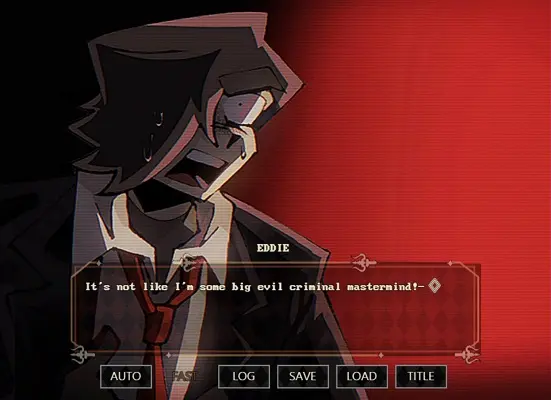
Jackpot Crash Course follows familiar visual novel controls. Advance text, choose responses, and use the menu options available in the build. The challenge is interpretive rather than mechanical. Before selecting an answer, look at the emotional direction of the scene. Is Eddie being invited to cooperate, pressured to confess, tempted to perform, or encouraged to attack somebody the show has made convenient to blame?
A first run works best when Eddie has a consistent priority. You might protect relationships, guard information, challenge authority, or pursue the pardon with ruthless focus. None of these approaches guarantees safety, but consistency makes the route readable. When the ending arrives, you can see what that version of Eddie gained and what he allowed the game to take.
For later runs, avoid flipping every option. Change one relationship or one repeated behavior. If Eddie reassured a rival, try keeping distance while leaving other choices stable. If he played for the camera, let him answer with uncomfortable honesty. A controlled change reveals branch logic and character reactions that disappear when the whole route is randomized.
A Rival Cast Built Around Competing Survival Styles
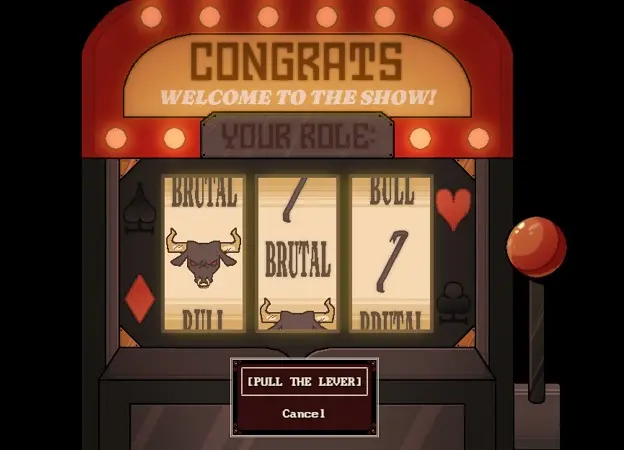
The contestants matter because each one offers a different theory of survival. Some people treat the show as a negotiation, others turn personality into armor, and others refuse to give the audience the reaction it wants. These styles are not static character labels. Pressure can expose where a strategy fails, and a person who looked composed may become unpredictable once the rules threaten the one thing they were trying to protect.
Eddie's relationships become practical without losing their emotional stakes. Friendship can provide information and support, yet it creates vulnerability because another person now knows what Eddie values. Rivalry can keep motives obvious while making cooperation impossible. The game is strongest when an interaction refuses to fit one category and the same person becomes ally, obstacle, witness, and possible threat within a single route.
This design gives replay a social purpose. A contestant who barely registered in one path may become essential in another. Later knowledge can transform an early joke into a warning or an apparently selfish decision into an attempt at protection. Jackpot Crash Course encourages players to revise first impressions rather than simply collect alternate scenes.
The Casino Is a Language, Not Just a Theme
Casino symbols give the production a convenient vocabulary. Odds make danger sound measurable, chips turn exposure into something that can be counted, and jackpots suggest that one dramatic success can erase a lifetime of consequence. The show uses these ideas to make its judgment appear procedural. If everybody understood the rules, it can pretend that everybody accepted the result.
Yet chance is never operating alone. Producers select what outcomes are possible, when a gamble is required, and who must bear the loss. A random result can therefore become an alibi for designed cruelty. The wheel did not choose its own sections, and the cards did not decide who would be forced to draw. Jackpot Crash Course makes the house responsible even when the house insists that luck made the final call.
The promise of pardon intensifies that imbalance. It looks like mercy, but mercy becomes leverage when it is placed beyond a series of dangerous tests. Contestants remain because refusing the game may mean surrendering the only visible route to freedom. The show can call this consent while carefully controlling the alternatives.
Performance Horror in Bright Colors
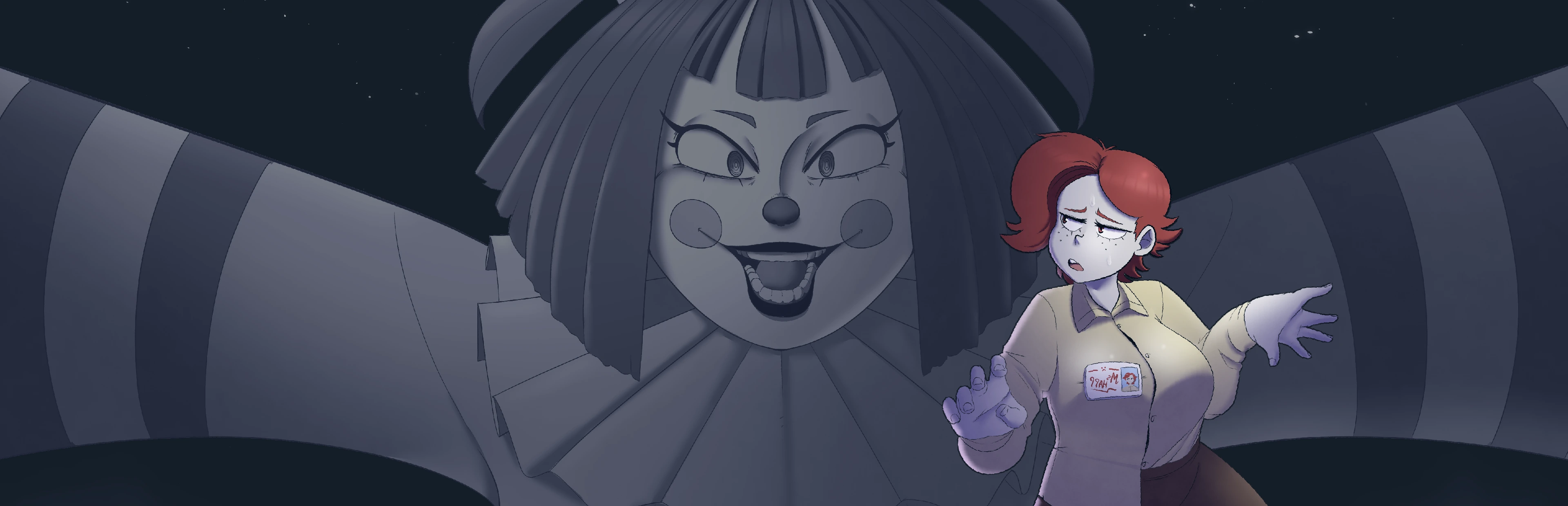
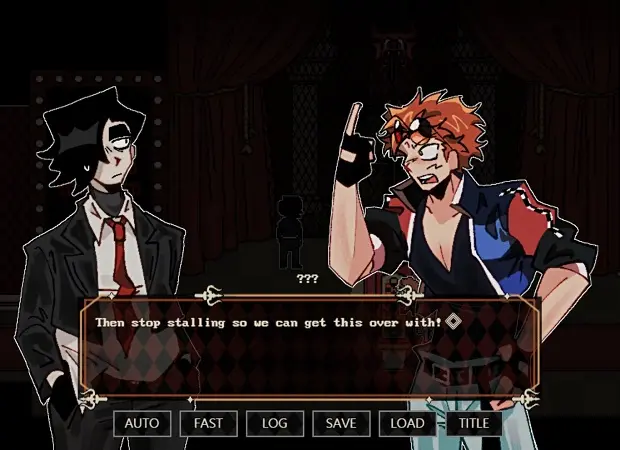
Many horror stories hide danger in darkness. Jackpot Crash Course does the opposite by making danger highly visible. Spotlights, saturated graphics, prizes, and stage banter insist that every event belongs to a successful broadcast. That cheerful framing becomes disturbing when contestants experience consequences that deserve grief or silence and the production keeps demanding energy.
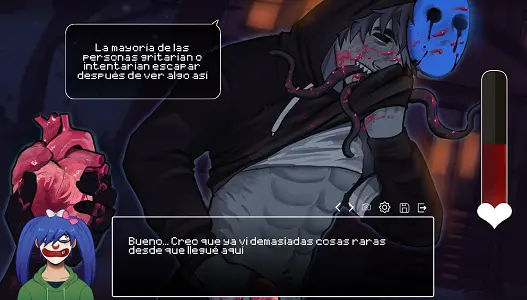
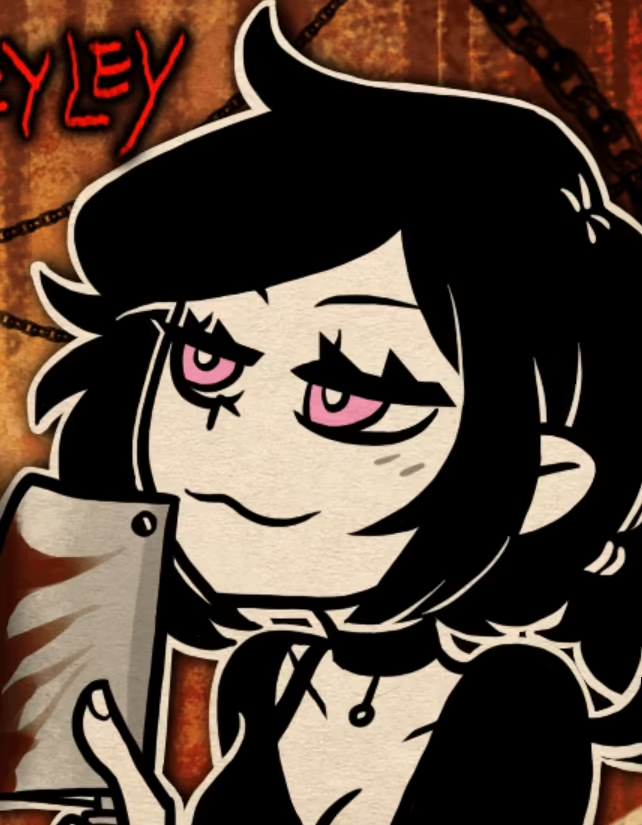
Character portraits carry much of this conflict. Expressions show the distance between a public mask and a private reaction. A smile can remain in place a moment too long; a neutral face can suggest that somebody has understood a rule before Eddie has. Because the visual novel keeps the cast close, small changes become readable clues rather than decorative animation.
Sound and pacing reinforce the effect. Loud presentation makes a sudden pause feel exposed, as if the show is waiting for somebody to fill dead air with panic. Playing with sound helps, but players sensitive to unsettling audio can lower the volume without losing the story. The essential tension comes from watching human responses collide with a format that treats every emotion as usable content.
Route Notes That Stay Spoiler Light
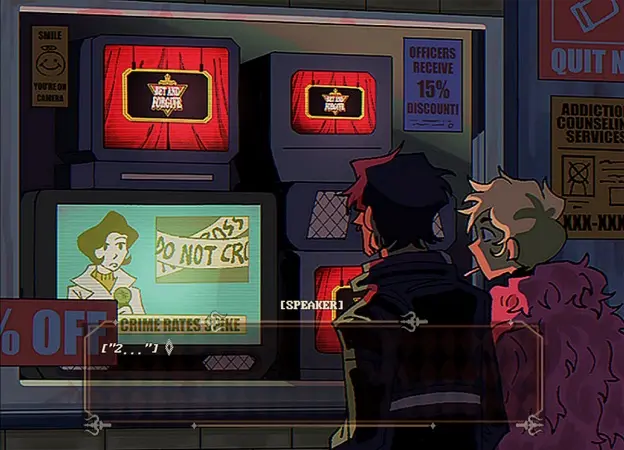
After an ending, write down a short route profile instead of every individual click. Record Eddie's main priority, the contestant he trusted most, the moment the show gained control, and the rule that produced the greatest conflict. Four observations are enough to guide a meaningful replay while preserving the pleasure of discovery.
On the next route, alter one profile item. Trust somebody else, answer the production differently, or let Eddie reveal a feeling he previously concealed. Keep the remaining pattern stable long enough to see what truly changes. This approach helps distinguish a major branch from a line that only changes local flavor.
Also note when official language and practical outcome stop matching. The show may describe a round as fair while distributing risk unevenly, or present a group decision after engineering the conflict that makes consensus impossible. Those contradictions are route landmarks because they reveal what the institution needs contestants to believe.
Browser Setup, Saves, and Mature Content
Desktop or laptop fullscreen is the clearest way to play Jackpot Crash Course online. The larger frame gives dialogue, portraits, and menus more room. On mobile, rotate to landscape and tap inside the frame if controls do not respond immediately. Browser autoplay rules may delay sound until the first interaction.
If the game remains black, wait for remote assets, refresh once, and check extensions that block scripts, storage, or third-party frames. Progress may be stored locally by the embedded build, so private browsing, clearing site data, or changing devices can remove saves. Keep simple route notes outside the game if you plan a long comparison.
Jackpot Crash Course is intended for mature players. It includes criminal histories, coercive situations, blood, violence, gore, disturbing imagery, unsettling audio, death-game danger, and public humiliation. The bright style is part of the critique, not a promise of light content. Step away if the spectacle becomes more stressful than entertaining.
Jackpot Crash Course FAQ
What is Jackpot Crash Course?
It is a casino death-game visual novel about Eddie, a convicted contestant pursuing a possible pardon through a dangerous televised competition.
Where can I play Jackpot Crash Course online?
Use the Play button above to launch the embedded browser build directly on this page without a separate installation.
Is Jackpot Crash Course an action game?
No. It is primarily a story and choice-driven visual novel. Careful reading and character interpretation matter more than fast reflexes.
Do choices change relationships?
Yes. Eddie's tone, trust, caution, and confrontational choices shape how rival interactions and route moments are understood.
How should I replay Jackpot Crash Course?
Change one alliance or behavior pattern at a time while keeping the rest of the route similar. This makes important branch points easier to recognize.
Does Jackpot Crash Course work on phones?
It may run in a mobile browser, but landscape orientation is recommended. Desktop fullscreen provides a more comfortable reading layout.
Why is there no sound?
Click inside the player and check tab volume and autoplay settings. Browsers often require interaction before embedded audio can begin.
What should I do if the iframe does not load?
Wait briefly, refresh once, and check whether privacy extensions, iframe blockers, or network filters are blocking the external game host.
Is Jackpot Crash Course for younger players?
No. Its criminal themes, violence, blood, gore, disturbing images, and death-game pressure are intended for mature audiences.