















Game Page
Blood Money 2
An Original Guide to Blood Money 2
A First Look at Blood Money 2
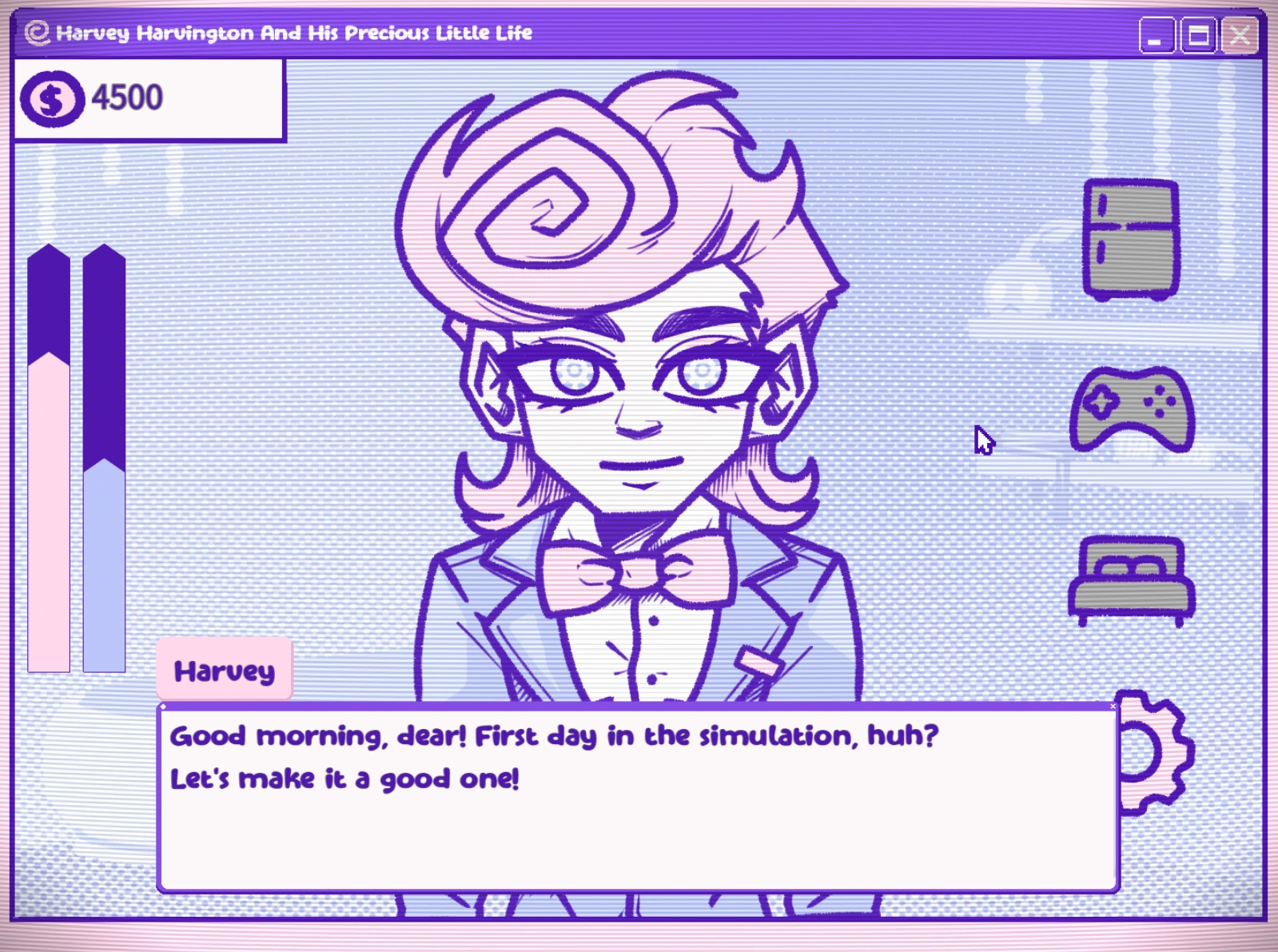
Blood Money 2 is a dark comedy life simulation about Harvey Harvington, moral choices, strategic decisions, resource management, and multiple endings in the Human Expenditure Program. The story uses a corporate simulation that turns care, productivity, and human value into measurable resources as more than decoration: it limits what the player can safely know and makes familiar details carry new emotional weight. Instead of explaining every danger immediately, the game lets uncertainty accumulate through repeated images, interrupted expectations, and reactions that become harder to dismiss. That patient design gives the opening room to establish trust before asking whether that trust was earned.
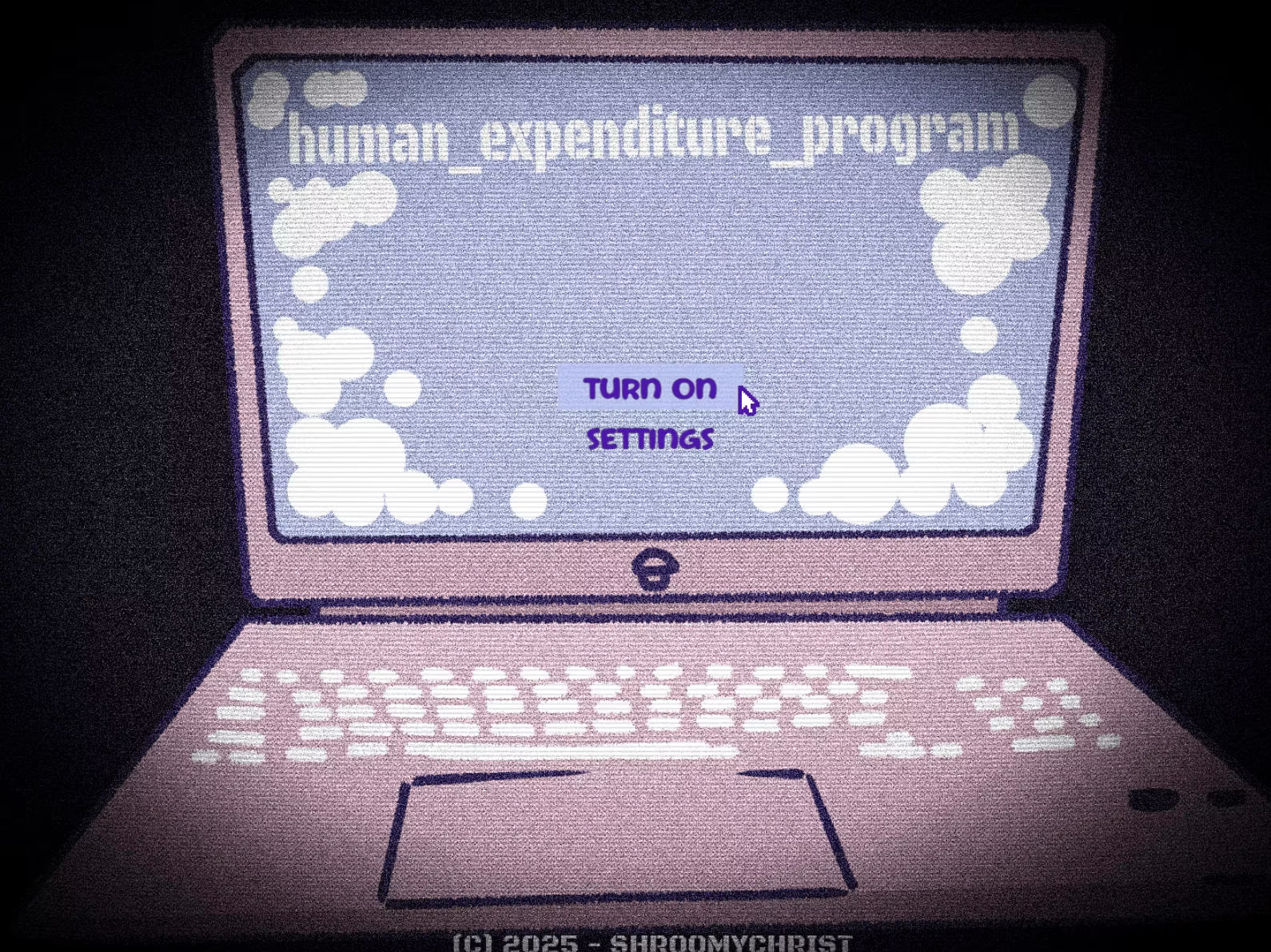
The embedded player above lets you begin Blood Money 2 in a modern browser without installing a separate package. Press Play, wait for the remote artwork and audio to initialize, and let the first scenes establish their rhythm. This is an experience built around managing routines, resources, upgrades, and moral decisions while observing how the program describes Harvey, so rushing through dialogue or environmental details can hide the information that later choices depend on. Fullscreen desktop play provides the clearest view, while landscape orientation is recommended on smaller screens.
This TADC Dating Sim edition approaches the game through the idea of unstable roles. Harvey Harvington may appear to occupy a recognizable place in the story, yet the interface presents exploitation as efficient administration and asks how easily responsibility disappears behind a system. The most useful question is therefore not simply what happens next, but who controls the meaning of what just happened. Reading with that question in mind makes character behavior, scene transitions, and apparently ordinary choices much more revealing.

How the Setting Creates Pressure
a corporate simulation that turns care, productivity, and human value into measurable resources gives the game a controlled stage. The player can learn its visible rules quickly, but emotional safety remains uncertain because every repeated location collects memory. A room, path, screen, or familiar object can look unchanged while its meaning shifts after a new conversation. This allows the story to build horror without discarding its visual identity. The place becomes threatening through interpretation rather than through constant transformation.
Limited space also concentrates attention. There are fewer distractions from Harvey Harvington, and fewer ways to postpone a difficult decision. Silence becomes an active part of the scene because the player knows another response or movement is expected. When the game finally breaks an established pattern, the change matters because the player has spent enough time learning what normal was supposed to look like.
Notice where the environment appears comforting and where that comfort depends on accepting somebody else's explanation. The game often places warmth and danger in the same frame, encouraging the player to decide which detail deserves priority. Strong play comes from holding both possibilities at once instead of treating every calm scene as safe or every strange detail as proof that immediate confrontation is required.
How to Play Blood Money 2 Thoughtfully
The practical controls are straightforward, but the interpretive work is not. managing routines, resources, upgrades, and moral decisions while observing how the program describes Harvey requires attention to tone, timing, and consequence. Before committing to a choice, identify what the action communicates: trust, distance, curiosity, compliance, resistance, or a promise that may be difficult to keep. Thinking in these terms is more useful than searching for an obviously correct button because the story responds to relationships as well as immediate outcomes.
For a first run, choose a coherent attitude and keep it recognizable. You might prioritize caution, honesty, empathy, self-protection, or investigation. Consistency gives the ending a readable shape. If every decision follows a different strategy, later consequences can feel arbitrary even when the game is responding carefully to the pattern the player created. Let the first route reveal what your natural interpretation produces before consulting a detailed walkthrough.
Pause when a familiar situation returns with one changed detail. Repetition is often the game's way of testing whether the player has updated an assumption. Compare expressions, wording, available choices, and who appears to possess information. A small difference can mark a major branch, while a dramatic line may only change local flavor. Careful comparison is therefore more effective than clicking rapidly in search of visible route markers.
Character Attention and Unreliable Safety
Harvey Harvington anchors the player's interpretation, but attention from a central figure is never automatically reassuring. the interface presents exploitation as efficient administration and asks how easily responsibility disappears behind a system. The writing gains power from allowing care, familiarity, fear, and control to overlap. A character can be sincere about one feeling while remaining dangerously wrong about what another person needs, which makes simple hero-and-villain labels less useful than observing behavior.
Watch how the character responds to uncertainty. Some scenes invite a direct answer, while others reveal that demanding certainty is part of the pressure. A pause may protect a boundary; a joke may prevent vulnerability; an affectionate statement may create an obligation that the protagonist never agreed to carry. These moments are route information because they show what kind of relationship the current choices are building.
Good character reading separates immediate warmth from long-term stability. An answer that produces a smile can still weaken the protagonist's agency, while a tense exchange can establish a boundary that later prevents greater harm. The game becomes more interesting when reactions are treated as evidence rather than scores. This approach also keeps replay focused on interpretation instead of reducing the cast to a set of locks opened by predetermined lines.
A Spoiler-Light Route Method
After reaching an ending, record four observations: the player's main priority, the moment the atmosphere changed, the relationship that carried the greatest pressure, and the assumption that proved least reliable. This short route profile preserves the emotional logic of the playthrough without documenting every click. It also creates a clear question for the next attempt instead of encouraging random opposite choices.
change one management priority or moral compromise at a time. Keep the rest of the route stable long enough to observe the consequence. Controlled variation helps distinguish accumulated tone from a single branch flag and makes subtle character reactions easier to compare. If the browser build supports manual saves, place them at natural scene boundaries rather than before every line so discovery remains part of the experience.
Compare endings by cost as well as success. Ask what the protagonist preserved, what had to be surrendered, and whether the apparent resolution depends on continuing an unhealthy performance. Two outcomes can look similar while carrying very different meanings for autonomy, trust, memory, or responsibility. This emotional accounting is often where the game's strongest replay value appears.

Visual Storytelling and Sound
The art establishes recognizable visual rules before it begins to disturb them. Framing, color, and repeated backgrounds help the player understand where attention should rest. Once that baseline exists, a changed expression or misplaced detail can feel louder than a completely new location. The effect rewards players who look at the whole composition instead of reading only the dialogue box.
Sound supports anticipation by controlling when a scene feels occupied and when it feels exposed. Headphones can make quiet cues easier to notice, but comfortable volume matters more than intensity. If audio does not begin immediately, click inside the frame because browsers frequently require a user gesture before embedded media can play. The narrative remains readable without maximum volume, so adjust the experience to your comfort.
The strongest aesthetic moments connect presentation to theme. Beauty, nostalgia, comedy, or domestic warmth may invite the player to relax, while the story quietly shows why relaxation is risky. This contrast is not merely a trick. It reflects the larger question of whether an appealing role or setting can remain comforting after the player understands the system supporting it.
Browser Performance and Save Safety
Use an updated Chrome, Edge, Firefox, or comparable browser. Close memory-heavy background tabs on older devices and allow the iframe a moment to download remote assets. If the player remains black, wait briefly, refresh once, and check extensions that block scripts, storage, third-party frames, or media. Repeated refreshing during initialization can restart loading and make a slow connection appear broken.
Desktop fullscreen offers the most comfortable text size and image framing. On mobile, rotate to landscape and tap inside the game before assuming controls are unresponsive. Managed school or office networks may filter the remote host even when this page loads normally. In that case, a different connection may be required; changing the site's visual code cannot bypass a network-level restriction.
Progress may be stored in the current browser profile. Clearing site data, opening a private window, switching devices, or using aggressive cleanup software can remove saves. Keep a brief external note of completed routes if you plan several endings. Record strategies and turning points rather than every answer so replay remains an interpretive experience rather than a mechanical checklist.

Themes, Content, and Player Comfort
Blood Money 2 explores the interface presents exploitation as efficient administration and asks how easily responsibility disappears behind a system. Its tension can feel personal because the story keeps the player close to the relationship or environment producing it. It includes coercion, dehumanization, dark satire, violence, and disturbing corporate themes. A visually gentle or humorous scene should not automatically be read as light content when the surrounding context involves coercion, identity pressure, or psychological instability.
Take breaks when the emotional tone becomes uncomfortable. Horror and dark narrative games work best when the player retains control over when and how to engage. Leaving fullscreen, lowering audio, or returning later does not weaken the route. It protects the distance needed to interpret the story rather than simply enduring it.
Approached at a deliberate pace, the game offers more than a sequence of shocks. It asks how people recognize danger when danger uses familiar language, how a role can become a trap, and what remains of choice when every available response carries social meaning. Those questions give the experience value after the immediate plot has been discovered.
Blood Money 2 FAQ
What is Blood Money 2?
Blood Money 2 is a dark comedy life simulation about Harvey Harvington, moral choices, strategic decisions, resource management, and multiple endings in the Human Expenditure Program.
Can I play Blood Money 2 online?
Yes. Press Play above to launch the embedded browser build without installing a separate desktop package.
How do I play Blood Money 2?
Use the available mouse, keyboard, or touch controls and focus on managing routines, resources, upgrades, and moral decisions while observing how the program describes Harvey.
Do choices or actions affect the outcome?
Yes. The game rewards attention to change one management priority or moral compromise at a time and may reinterpret earlier decisions as the route develops.
Does the browser build work on mobile?
It may run on a modern mobile browser, though landscape orientation and desktop fullscreen provide a clearer layout.
Why is the embedded game blank?
Wait for remote assets, click inside the frame, refresh once, and check extensions that block scripts or iframes.
Will my progress remain saved?
Progress may rely on local browser storage, so clearing data, changing profiles, or using private mode can remove it.
Is Blood Money 2 suitable for children?
Review its themes before playing. It includes coercion, dehumanization, dark satire, violence, and disturbing corporate themes.
What is the best replay strategy?
Use a controlled comparison: change one management priority or moral compromise at a time, while keeping other decisions as stable as possible.