














Game Page
Helping Your Boyfriend
Intimacy, Perspective and the Unreliable Comfort of Home
An Established Romance, Not a First Date
Helping Your Boyfriend begins on the other side of the usual dating-game introduction. You already share a home with Adrian, a doctor who is also your boyfriend. A condition affecting your legs leaves you unable to walk. The story includes waking in the night, assisting with the dismantling of old dolls, and a nighttime stranger who threatens you and forces you to take a pill. That combination places an intimate routine under pressure before the player can treat the relationship as a straightforward courtship.
Created by Zieelane and Mousefishdog, this is a horror romance visual novel. Readers coming from a colorful relationship simulator should not mistake the romantic framing for a promise of emotional safety. Violence, blood and gore, flashing imagery, jumpscares and toxic relationships are part of its warning profile. The question is not simply whether Adrian likes the protagonist. It is how affection, vulnerability and incomplete knowledge change the experience of being close to someone.
This TADC Dating Sim guide concentrates on perspective: what a scene lets you see, what a character tells you, and what remains unresolved between those two things. It is an original reading companion rather than an ending solution. The browser edition loads from an external host, and features may differ from those described for the official release. Consult the active game menu when deciding which options are available for your session.

Read the Picture and the Conversation Separately
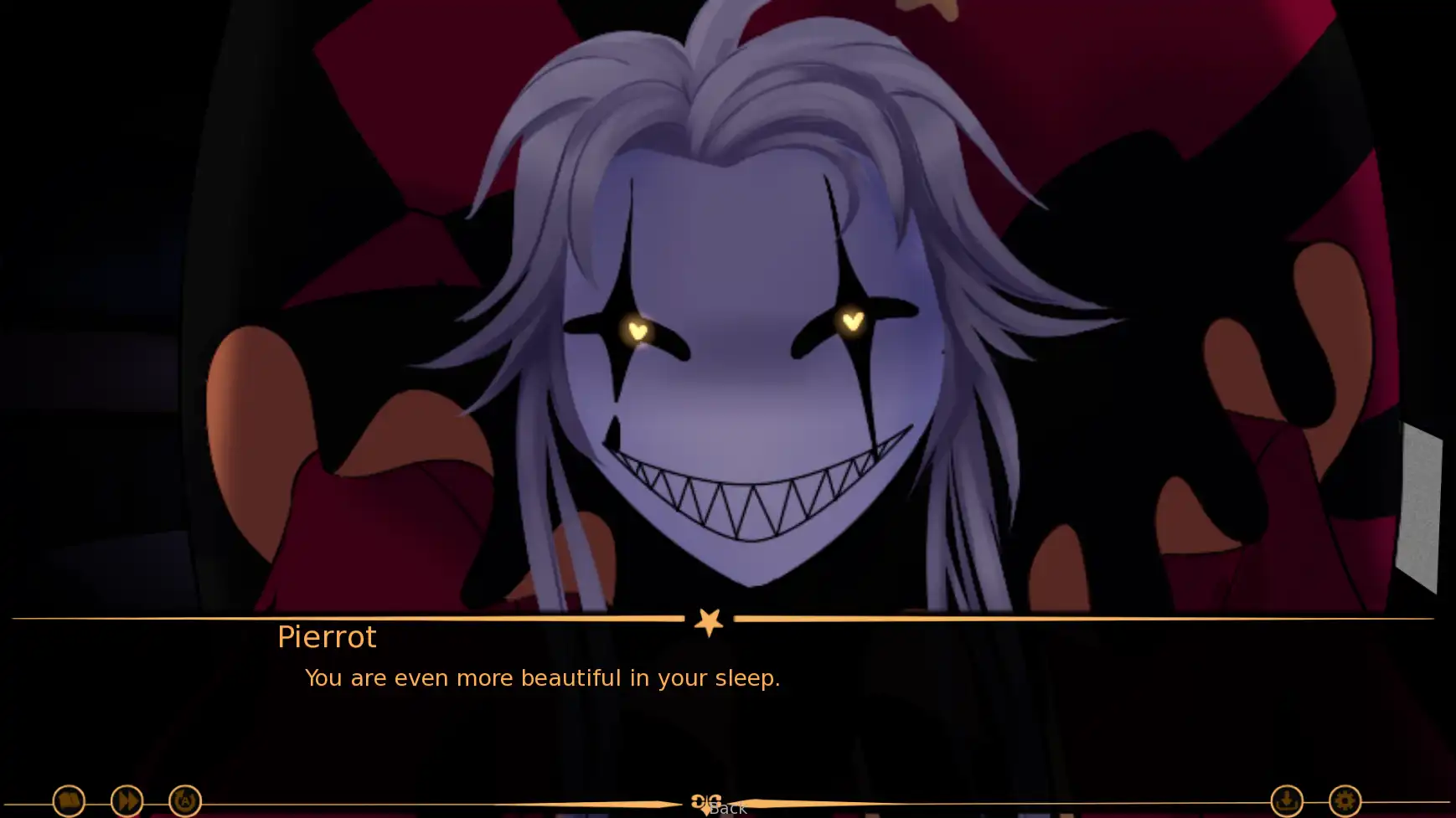
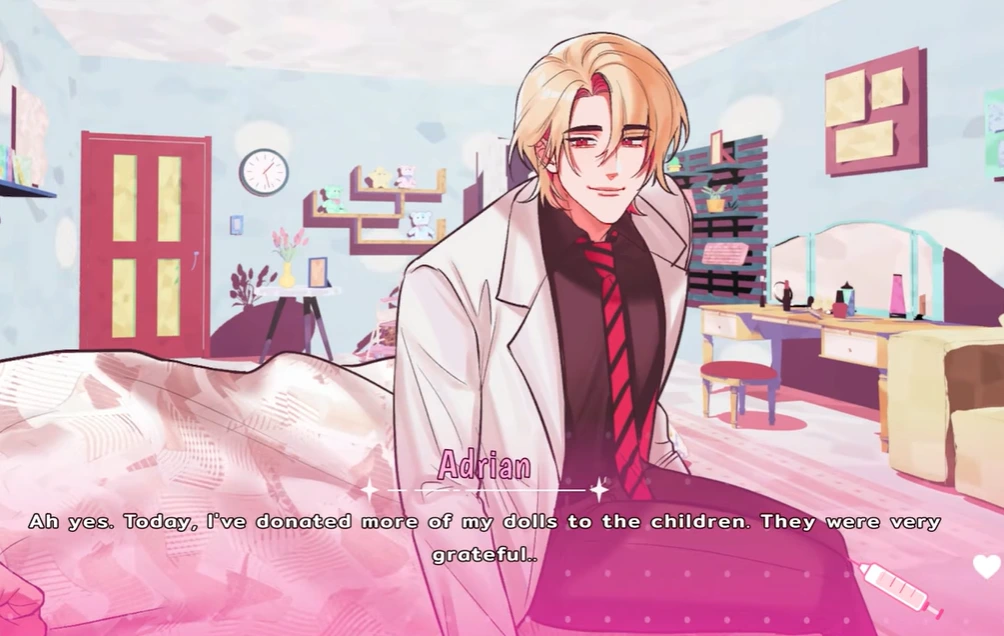
Romance artwork can establish a feeling before a sentence appears. Warm colors, a close face and a gentle expression encourage the viewer to interpret proximity as welcome. Helping Your Boyfriend gives that visual vocabulary a less comfortable context. A useful approach is to pause mentally between what a picture suggests and what the conversation establishes. Attraction is a response to presentation, not proof that a character has explained a situation honestly or respected another person's wishes.
Try describing a scene without emotional labels first. Note the distance between characters, the visible room, the lighting and the words that have actually been spoken. Then add your interpretation. The difference between those two descriptions makes the storytelling easier to appreciate. You may discover that your unease comes from timing, a missing explanation or the contrast between a reassuring expression and an unsettling request rather than from an explicit threat.
This method does not require distrusting every pleasant moment. It leaves room for uncertainty, which is central to horror. A player who decides the whole story from a single smile may miss the way later scenes complicate that initial reading. Let impressions change when evidence changes, and resist turning a portrait into a mechanical good-choice or bad-choice indicator.

A Doctor Boyfriend Changes the Meaning of Advice
Adrian's professional and personal roles overlap in the premise. Advice from a doctor and reassurance from a partner can carry different kinds of authority, yet the protagonist receives both from the same familiar person. Watch for the difference between being given useful information and being asked to accept an explanation because of who offers it. That distinction is a critical reading tool, not an accusation that every caring gesture must conceal a predetermined motive.
The protagonist's difficulty walking makes practical support important, but it does not remove their right to make decisions. Avoid reading disability itself as a horror device or assuming the character is incapable of understanding danger. The more meaningful tension concerns agency: whether the person receiving help can ask questions, express discomfort and remain a participant in their own life. An intimate relationship becomes narratively complicated when the language of care competes with those ordinary freedoms.
Consider the timing of reassurance as well as its wording. Does it arrive after a question has been answered, or in place of an answer? Does it make the scene easier to understand, or merely easier to stop questioning? These are invitations to pay attention during play. They are not verified branch triggers, and the guide does not claim that tracking them produces a particular ending.
Why the Household Task Deserves Attention
Taking apart old dolls provides a physical activity inside a dialogue-driven story. The title's idea of helping becomes something the player performs rather than only something a character says. This shift can alter the pace of attention. While reading, you can weigh language and expression. During a task, your focus may narrow to the immediate movement the interface requests. Notice the transition without assuming that completing the activity means endorsing everything happening around it.
The supplied premise does not establish every detail of the dolls or explain their full significance. A spoiler-light guide should preserve that gap instead of decorating it with an invented revelation. You can still ask useful questions: how is the work introduced, what makes the request sound ordinary, and does carrying it out feel different from hearing it described? The same simple action can carry a different emotional weight after a later scene changes the context.
Five minigames are advertised for the official project. Their exact availability in this external browser build has not been checked. Treat each on-screen instruction as a fresh rule, not an invitation to repeat the last interaction automatically. A careful first attempt is useful because it shows whether an obstacle is mechanical, interpretive or simply a lack of focus inside the embedded frame.
A Control Reference for Different Reading Speeds
The provided control reference lists click or Enter for advancing text and mouse dragging for minigames. Space hides the dialogue during ordinary reading. L shows the dialogue history, A starts automatic advancement, and Ctrl or Tab skips dialogue. Quick-time events use the arrow keys together with Space. Look for the bell at the top to reach saving, loading and settings. These mappings come from the supplied information, not from a claim of hands-on verification of this host.
Different reading tools suit different goals. History helps when you want to reconsider wording without guessing what you remember. Hiding the dialogue can let you inspect artwork, although it does not reveal hidden facts by itself. Automatic progression can maintain a scene's flow, but manual advancement gives you time to stop when something feels important. Skipping is best reserved for familiar material; using it during a first encounter risks losing exactly the detail you hoped to understand.
Pay special attention when the interface changes from dialogue to a reaction prompt. Space has more than one role, so context matters. Before a keyboard action, click inside the player and check the prompt. If the browser responds instead of the game, restore frame focus. Sending repeated inputs while uncertain can make it harder to tell whether the difficulty is a control issue or the activity's actual timing requirement.
Nighttime Suspense and the Limits of Viewpoint
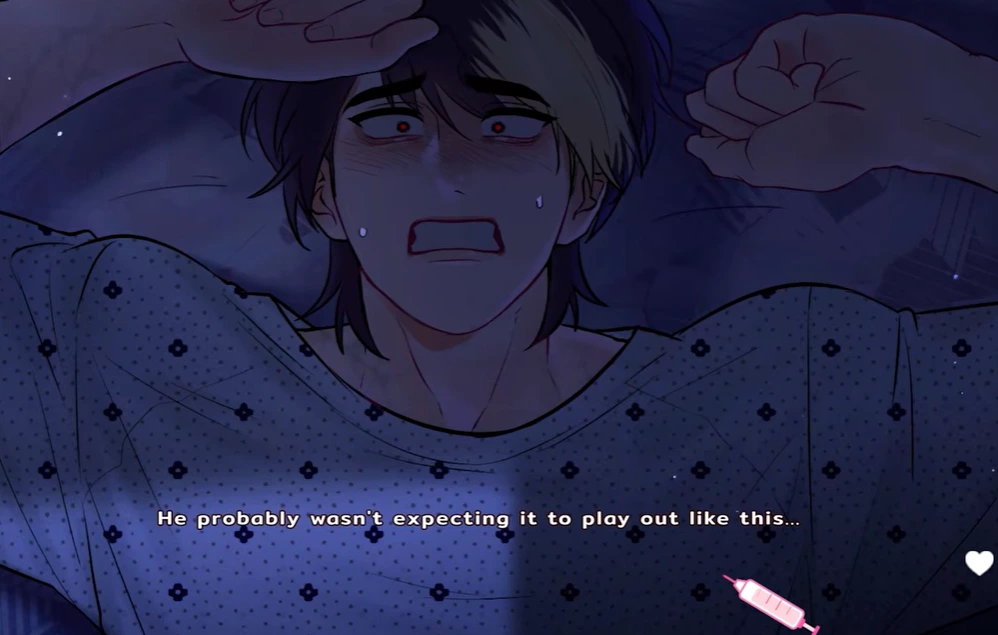
Waking at night interrupts the confidence created by a shared home. A place that seemed familiar can become difficult to interpret when information arrives in fragments. The threatening stranger adds another voice without automatically giving the player a reliable alternative. Suspense depends on the gap between needing to respond and not yet knowing enough. That gap is more interesting than a simple rule that familiar characters are safe or unfamiliar characters are honest.
When the stranger forces the protagonist to take a pill, keep the fictional threat separate from real-world medical conclusions. The guide is not diagnosing the leg condition or advising anyone about treatment. Within the story, you can examine whether a demand offers explanation, whether refusal appears possible, and how the protagonist's position changes what a threat means. Those questions concern power and narrative perspective, not the clinical properties of a substance the supplied information does not identify.
For a first reading, allow a scene to remain unresolved until the game provides more context. On a second reading, compare what you knew then with what you know now. Mark the point where an interpretation becomes possible rather than rewriting earlier uncertainty as certainty. This makes replay a study of the story's disclosure of information instead of a contest to prove that every twist was obvious.
Personalization Without a Promised Secret Route
The official project describes customization for the protagonist's name, pronouns and body type. Personalization can make a visual novel feel less like watching a fixed character from a distance, because the interface addresses a version of the protagonist you helped define. That effect is worth considering on its own. It should not be confused with a claim that a particular identity selection makes the story easier, changes a hidden score or unlocks a secret conclusion.
Check what the embedded edition actually offers when its menu appears. Release differences are possible, and this page cannot certify the available options without testing them. Choose settings that make the experience comfortable to read rather than searching for a supposedly optimal combination. If you later compare runs, record customization alongside your other notes simply to keep the sessions identifiable, not because this guide has established it as a route variable.
You also do not have to identify personally with every response the protagonist gives. A customized character can still occupy a situation you would never choose. Maintaining that distinction lets you explore difficult fiction without turning a disturbing decision into a judgment about yourself. The game's warning profile is a reason to set boundaries around the experience, not a challenge to endure more than you want.
Replay as Comparison Rather Than a Perfect Score
Four endings are advertised by the official project. This guide does not provide their names, required sequences or a guaranteed best route because those details have not been verified. An ending count is useful for understanding the scope of the official work, but it does not confirm what this particular hosted build contains. Avoid treating a browser issue or an unfamiliar menu as proof that you made the wrong narrative choice.
For a manageable replay, choose one question from your first run. Perhaps you want to reconsider a conversation, a request for assistance or the moment you began to distrust an explanation. Save before the relevant decision if the active build permits it, then change one choice while keeping the surrounding choices consistent. Compare the next difference you can actually observe. When multiple inputs change at once, the result cannot reliably tell you which one caused the divergence.
Keep notes short enough that they support the story instead of replacing it. A save label, a changed response and a sentence about the consequence are often sufficient. An uncomfortable conclusion may reveal a useful part of the narrative rather than represent a failed attempt. Comparing what each ending says about closeness, knowledge and autonomy is more illuminating than forcing every outcome into a simple winner-or-loser ranking.
Loading, Mobile Input and Saving Expectations
Pressing Play requests the game from an external host, so loading depends on your network connection and that service being available. A refused frame may require a hosting-side correction; it is not necessarily something a player can fix by changing browser settings. If loading stalls, wait for an obvious progress indicator before refreshing and keep a note of any error message. Do not clear all site data as an automatic first step, especially if you want to preserve saved progress.
A keyboard and mouse match the supplied control list directly. A phone may provide enough room in landscape orientation for reading, but that does not prove it can handle every drag or arrow-key prompt. Mobile compatibility has not been tested here. If the current build offers no touch equivalent for a required action, a keyboard-equipped device is a practical alternative rather than a promise that a particular browser will solve the limitation.
Use the top bell to inspect the save and load interface before investing in a long route. Saved progress may depend on browser storage and may not survive private browsing, storage cleanup or a device change. Persistence has not been verified for this embed. The two optional videos on this page may contain spoilers; they are included as viewing resources, not as proof that this page tested the game or that a video matches the exact hosted release.
Helping Your Boyfriend FAQ
What makes Helping Your Boyfriend different from a conventional dating sim?
It starts with an established relationship and turns domestic care into a horror-romance premise. Its focus is uncertainty around intimacy, not a promise of a safe courtship.
Who is responsible for the original game?
Helping Your Boyfriend is by Zieelane and Mousefishdog, two separate creators. This page provides independent commentary and an external browser embed.
What content warnings should I read first?
Expect violence, blood and gore, flashes, jumpscares and toxic relationships. Medical threats and dependence within an intimate household are part of the supplied premise.
What can be customized?
The official project describes name, pronoun and body-type customization. Options in this hosted edition must be checked in its actual menu.
Are all four endings and five minigames available here?
Those counts describe the official project. This page has not verified browser-build parity, so it cannot promise that every advertised feature is present.
How do I pause my reading to revisit a line?
The supplied controls use L for history, Space to hide dialogue, and the top bell for settings and save/load. Turn off automatic advancement when you want more reading time.
Which controls matter during interactive scenes?
Mouse dragging is used for minigames; arrow keys and Space are used for quick-time prompts. Always read the current prompt because Space has a different role during dialogue.
Why might the game not load on my device?
The player depends on an external host, network access and compatible browser controls. Wait for assets to load and record any error message. A keyboard-equipped device may be needed for prompts without touch equivalents.
Can these notes guarantee a particular ending?
No. They suggest comparing controlled replay choices without inventing ending steps or treating speculation as confirmed route logic.